The Statement
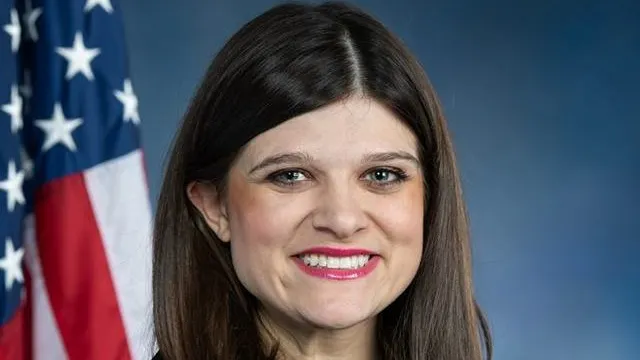
At a July 27, 2026 debate on WJBK Fox 2 Detroit, U.S. Rep. Haley Stevens was asked directly whether she had taken money from utility companies for her U.S. Senate campaign. She answered: “No.”[1]
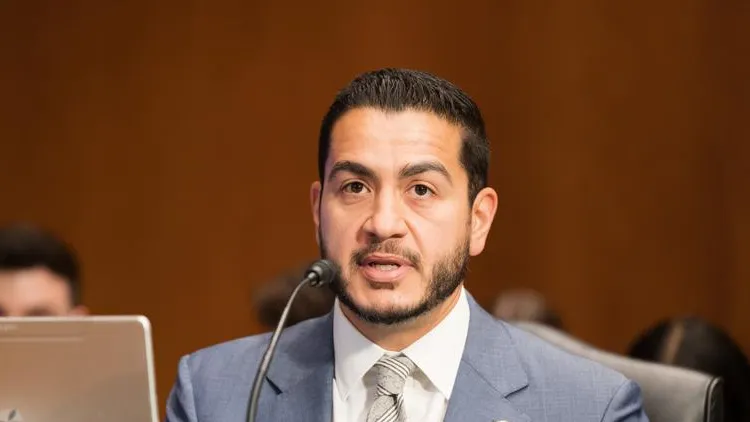
The question did not come from a moderator. It came from pressure built over months of campaigning, with her primary opponent Dr. Abdul El-Sayed making corporate money — and utility money specifically — a centerpiece of his challenge. El-Sayed has pledged to accept no corporate PAC contributions. Stevens has not. The exchange over utility donations was one of the sharpest moments in a race analysts describe as competitive going into primary day.[7]
Verdicts
“Haley Stevens said she has not taken money from utility companies for her U.S. Senate campaign.”
She made this statement, and it rests on a narrow technical interpretation: utility PAC checks were written to her House committee, not her Senate committee. But $5,000 in utility PAC funds were transferred from the House committee to the Senate committee in July 2025, shortly after she launched her Senate bid. The statement omits this material fact and creates a false impression of separation that the records do not support.
“Stevens’s Senate campaign received no contributions connected to Michigan utility companies or their executives/PACs.”
Federal Election Commission records show her Senate campaign committee received funds that originated from DTE Energy’s corporate PAC ($2,500) and Consumers Energy’s corporate PAC ($2,500), transferred from her House committee after she launched her Senate run. “Connected to” utility companies describes this accurately. The claim, taken at face value, is contradicted by the transfer record.
The Donation Trail
The key transactions, per FEC records reviewed by PolitiFact and Bridge Michigan:[1][2]
February 2025: DTE Energy’s PAC also contributed $2,500 to Stevens’ congressional committee (not subsequently transferred to the Senate account).
April 2025: Stevens launches her Senate campaign, registering a new FEC committee — Haley Stevens for Senate (C00903039).
July 2025: Stevens’ House committee transfers funds to her Senate committee. The transfer pool includes the March 2025 utility PAC contributions. The Senate committee received $1,681,792 in total inter-committee transfers.[5]
Since 2019: DTE Energy’s PAC has contributed a total of $45,000 to Stevens’ House campaigns and her congressional leadership PAC (HMS Scrap PAC).[9]
Her Senate committee’s total receipts from April 2025 through July 15, 2026 were $11,884,632.[5] The $5,000 in utility PAC contributions that passed through the transfer represents roughly 0.04% of that total — a negligible share of her overall funding, but the relevant question for her categorical denial is whether it reached the account at all, not how much it was.
The Right Question
Stevens’ denial, and much of the subsequent coverage, framed the question as: “Did a utility company PAC write a check to your Senate committee?” The answer to that narrow question is technically no.
The better question is: “Has your Senate campaign benefited from utility company political money?” The answer to that is yes. The distinction between a direct PAC contribution and a transfer of PAC-originated funds to the same candidate’s Senate committee is legally real but economically thin.
Penn State law professor Stanley Brand, quoted by PolitiFact, put it plainly: “She may be technically correct, but as a matter of discretion, it may expose her to a political attack, that she’s not being 100% forthright.” Case Western Reserve political scientist Justin Buchler was more direct: “One could say that the second principal campaign committee had not taken donations. But if the first principal campaign committee had taken donations, that would be hair splitting.”[1]
The Case for Stevens
The strongest version of Stevens’ position is worth stating clearly, because it has genuine legal grounding.
Under FEC rules, a House campaign committee and a Senate campaign committee are distinct authorized committees, even for the same candidate. Each has its own registration, its own treasurer, and its own disclosure obligations. A contribution made to the House committee is legally a contribution to that committee, not to the Senate committee. The subsequent transfer is a separate transaction under a different disclosure category (“transfers from other authorized committees”).
This is not a loophole — it is how the FEC designed multi-committee candidate structures. Stevens’ campaign team can credibly argue that her Senate committee never solicited or received a utility PAC check, and that the funds in question entered a transfer pool weeks before she even launched her Senate campaign.
There is also context about what the donations appear to have bought. Stevens introduced legislation that would withhold federal funding from utilities that raise rates more than once per year, directly targeting DTE and Consumers Energy.[2] If the $45,000 in career DTE contributions were intended to ensure friendly treatment, the investment has not paid obvious dividends.
That said: the steelman’s strongest point is about intent, not about the factual question of whether utility money reached the Senate account. It did.
Why This Charge Lands in Michigan
Utility company political donations are not abstract in Michigan in 2026. The state is in the middle of a sustained rate-hike cycle that has made DTE Energy and Consumers Energy targets of bipartisan frustration.
In February 2026, Michigan regulators approved a $242 million electric rate increase for DTE — less than half of what DTE had requested, but still a 4.1% rise in residential bills.[6] In April 2026, DTE filed for an additional $474 million rate hike, a 9.7% proposed increase for residential customers.[11] In March 2026, Consumers Energy received a $276.6 million rate increase approval, translating to an 8.9% rise for residential customers.[3]
Beyond rates, Michigan utilities have faced criticism over reliability — extended outages following storms have drawn public anger in the Detroit metro area. The Michigan League of Conservation Voters reported that DTE and Consumers Energy contributed more than $156,000 to state lawmakers in just the first four months of 2026.[12] The political economy is one critics describe as regulatory capture: utilities fund campaigns; regulators and legislators treat utilities gently; ratepayers absorb the cost.
Against that backdrop, 148 Michigan state legislators signed pledges to reject utility company campaign donations, and a ballot initiative to ban utility and government contractor contributions entirely cleared its signature threshold in July 2026.[4] The controversy is not merely about Stevens. She became a symbol of a broader question Michigan voters are actively debating: whether it is possible to accept utility company money and still hold utilities accountable.
Scorecard: Who This Affects
| Actor | Outcome | Why |
|---|---|---|
| Haley Stevens | Lost | A clear factual record — utility PAC money in the Senate account — undercuts a categorical denial made on the eve of the primary. The technical defense is available but politically costly. |
| Abdul El-Sayed | Won | His no-corporate-PAC pledge, which had been easy to dismiss as symbolic, now looks substantive by contrast. Stevens’ denial handed him a cleaner attack line than the underlying $5,000 figure alone would have warranted. |
| DTE / Consumers Energy | Mixed | The donations became a liability for a candidate who might have been a useful ally — undermining the value of PAC spending by generating adverse attention rather than quiet goodwill. |
| Mich. ratepayers | Lost | Whether Stevens or El-Sayed wins, the episode illustrates how utility political spending shapes the conditions under which candidates must defend their credibility, rather than focusing debate on rate relief or reliability standards. |
| Ballot initiative (utility donation ban) | Won | A high-profile Senate debate moment involving utility donations, landing during signature-gathering season, gave the campaign a concrete illustration of what the initiative is meant to address. |
What to Watch
- AUG 4 Michigan Democratic primary, tomorrow. The utility donation controversy landed in the final week of a race analysts describe as competitive entering primary day.[7] PolitiFact published its fact-check on July 29 — five days before polls open. Whether it shifts the outcome is unknowable in advance; watch the margin and whether the issue surfaces in post-primary candidate statements.
- ~SEP 2 Utility donation ban: legislative deadline. The Michigan Board of State Canvassers approved ballot initiative signatures on July 24, 2026, starting a 40-day clock. If the legislature does not act by approximately September 2, 2026, the proposal goes to voters in November.[4] Watch whether Republican or Democratic leadership in Lansing moves to intercede.
- NOV 3 General election. The Democratic nominee faces Republican former Rep. Mike Rogers in what is expected to be a competitive race for the seat vacated by retiring Sen. Gary Peters. If Stevens wins the primary, how she handles the utility money narrative in a general-election context will determine whether it remains a liability or fades as a campaign issue.
- ONGOING DTE’s pending $474M rate hike request. Filed in April 2026, the Michigan Public Service Commission has not yet ruled. A decision favoring DTE would reignite the debate over utility political influence regardless of who wins Tuesday’s primary.
Sources
- In U.S. Senate race, Haley Stevens blurs lines on Michigan utility donations
- Fact-checks: Haley Stevens’ record on AIPAC support, Barack Obama endorsement and DTE
- Michigan regulators approve $276.6M Consumers Energy rate hike
- Michigan utility campaign donation ban clears signature hurdle
- HALEY STEVENS FOR SENATE — Committee financial summary (C00903039)
- DTE Energy secures $242 million electric rate increase
- In the race for Senate in Michigan, multiple party fights are colliding for Democrats
- 148 Michigan politicians pledge to refuse utility campaign donations
- Haley Stevens Received $45,000 From DTE-Linked Political Committees in Past Campaigns
- Guide: How Michigan’s process for setting DTE, Consumers rates factors into midterms
- DTE proposes $474M Michigan electric rate hike
- Michigan League of Conservation Voters calls out utilities for $156K+ in political campaign spending

.jpg)