A better question than the viral one
Social media commentary frames this as a simple yes-or-no: did Biden’s pardon eliminate Fauci’s Fifth Amendment privilege? But a binary answer is the wrong shape for this question. The right question is: for which specific categories of questions did the pardon extinguish the privilege, and for which categories did it leave it intact?
Fauci was asked about conduct stretching across more than a decade of federal public health work, about statements he made after the pardon was issued, and potentially about matters under investigation by state law enforcement. The pardon’s reach is not uniform across all of those. Collapsing them into a single verdict is what the viral commentary does, and that collapse is where the reasoning fails.
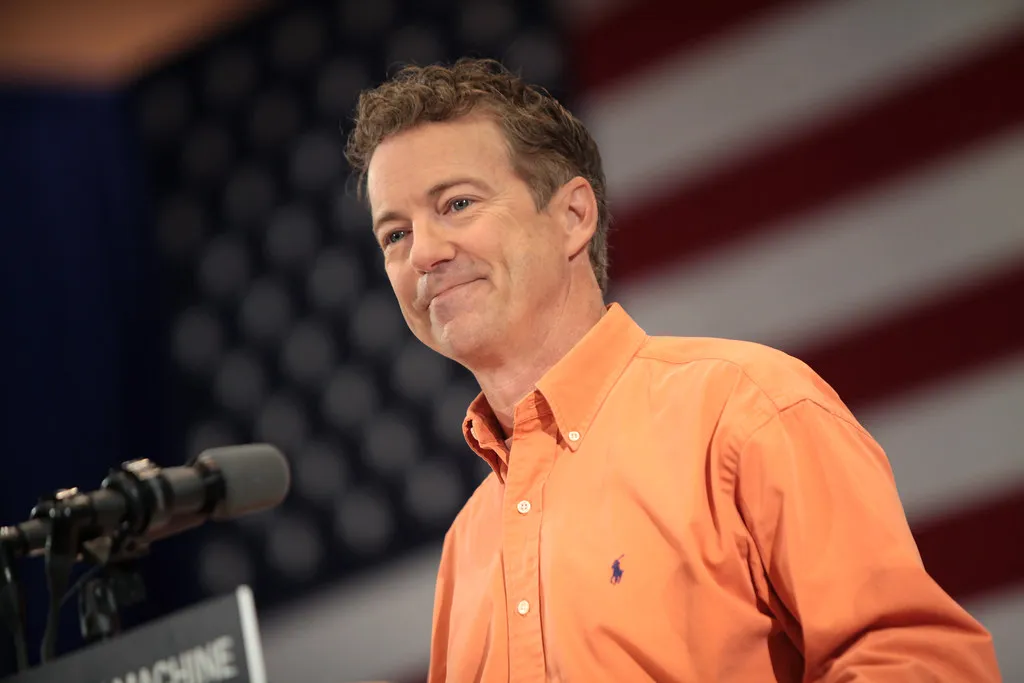
Sen. Rand Paul, who chaired the hearing and has the strongest interest in arguing Fauci had no privilege, acknowledged the reality: “It’s a novel legal question that the courts may have to decide.”[1]
What the Fifth Amendment covers here
The Fifth Amendment’s self-incrimination clause protects a witness from being compelled to give testimony that could expose them to criminal prosecution. It does not protect against embarrassment, reputational harm, or adverse civil consequences. It applies in criminal trials, grand jury proceedings, administrative hearings, and (by longstanding practice) congressional testimony.[2]
In congressional settings, a witness subpoenaed to appear can invoke the Fifth on a question-by-question basis if truthful answers could expose them to prosecution. Invoking the Fifth does not imply guilt in a criminal proceeding; a court cannot instruct a jury to draw a negative inference from a criminal defendant’s silence. In a congressional hearing or civil matter, the inference rules differ — a committee can note the invocation, but the privilege is still legally valid if the underlying risk of prosecution is real.
The specific protection at issue here is against federal criminal prosecution for pre-pardon conduct. Whether that protection survives a pardon for those same federal offenses is the core legal question.
The legal effect of Biden’s pardon
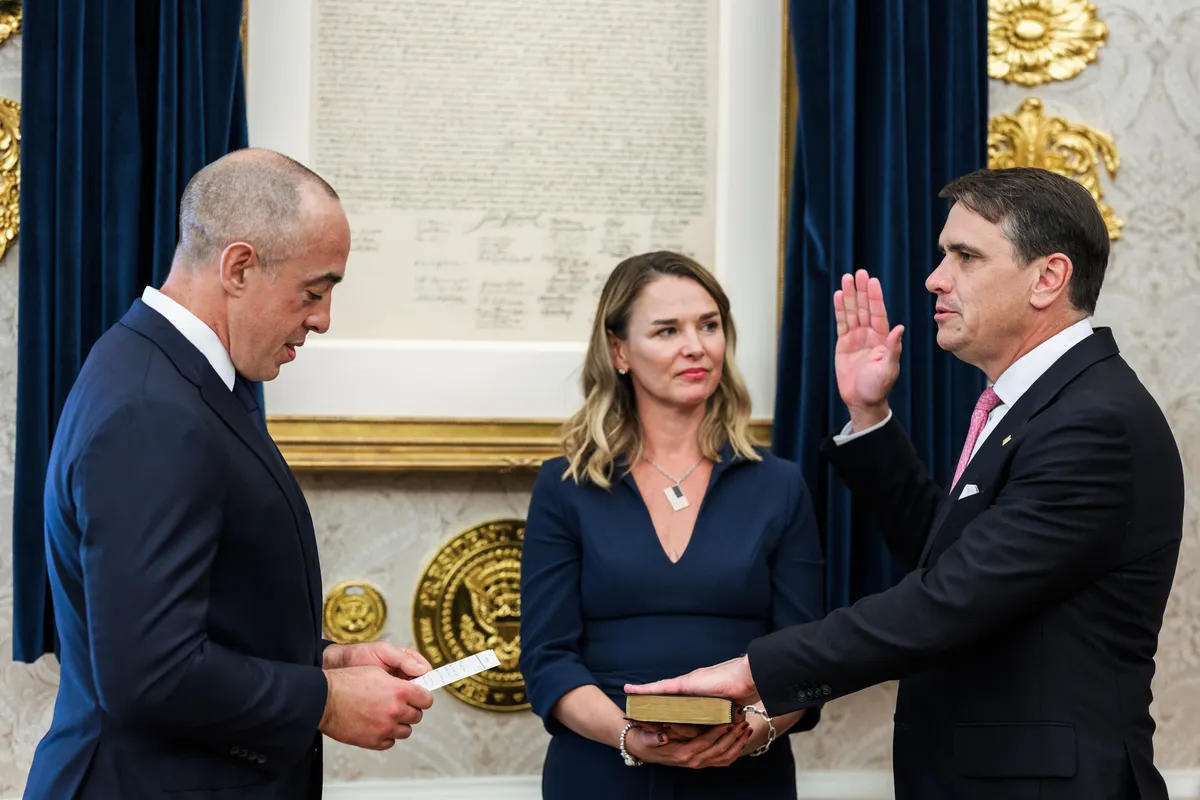
President Biden issued Fauci a “full and unconditional” pardon on January 19, 2025, his final full day in office, covering any federal offenses Fauci may have committed between January 1, 2014, and the date of the pardon, in connection with his roles as NIAID director, White House Coronavirus Task Force member, and Chief Medical Advisor.[3] The pardon was signed via autopen, a device that mechanically reproduces a handwritten signature when authorized by the signatory.
The foundational precedent on pardons and the Fifth Amendment is Brown v. Walker, 161 U.S. 591 (1896). The Supreme Court held that legal protection from prosecution (whether statutory immunity or a pardon) eliminates the constitutional basis for invoking the self-incrimination privilege, because the privilege exists to protect against prosecution, not testimony per se. The Court quoted the principle that “a witness who has already received a pardon cannot longer set up his privilege, since he stands, with respect to such offense, as if it had never been committed.”[4]
A related 1915 precedent adds a wrinkle. In Burdick v. United States, the Supreme Court held that a pardon implies guilt and can therefore be refused by the recipient. George Burdick, a newspaper editor, rejected President Wilson’s pardon specifically to preserve his Fifth Amendment rights. Fauci did not refuse Biden’s pardon, so the refusing-a-pardon path was never available to him — but Burdick underscores that the relationship between pardons and self-incrimination is not simple in either direction.[2]
Aziz Huq, a law professor whose analysis is cited by the National Constitution Center, summarizes the basic logic: pardoned people are “by definition no longer in legal jeopardy for federal offenses, so they can no longer claim any Fifth Amendment privilege in that realm.”[2] Former federal prosecutor Jonathan Fahey offered the same reading: “If we don’t dispute the validity of the pardon, he is absolutely correct with respect to federal offenses.”[5]
That caveat (“if we don’t dispute the validity”) is where the contested territory begins.
Three reasons the case is legally contested
1. The perjury exposure gap
Biden’s pardon covers federal offenses through January 19, 2025. The Senate hearing occurred July 29, 2026, 18 months later. The pardon explicitly does not protect against crimes committed after its issuance.[3] This creates a real gap: any false statement Fauci made during the hearing would constitute a new federal crime (perjury or making false statements to Congress), unshielded by the pardon.
Fauci’s legal team argued that the blanket Fifth Amendment approach was warranted precisely because answering some questions while declining others could be used to construct a perjury trap, a scenario where prior statements now on the record are compared against current testimony.[6] Jonathan Turley, a George Washington University law professor, identified perjury exposure as the primary substantive concern: the risk is “any false statements that he made in the hearing in dealing with these questions.”[5]
Whether this specific concern justifies a blanket invocation covering all questions, including Paul’s question about what day of the week it was, is disputed. Former DOJ official Abhishek Kambli argued that truthful answers about factual matters carry no meaningful perjury risk: “it’s hard to see how he would walk into a perjury trap if he’s just telling the truth, because perjury also requires that you knowingly made a false statement.”[5] But Fauci’s lawyers counter that the strategic risk of selective waiver is real: answering some questions can be construed as opening the door to the entire subject matter.
2. State prosecution exposure
A federal pardon covers only federal crimes. It provides no protection against prosecution under state law. On August 5, 2026, Florida Attorney General James Uthmeier issued an investigative subpoena to Fauci, alleging he may have violated Florida law by profiting from pandemic guidance he issued as a federal official. Louisiana Attorney General Liz Murrill and West Virginia Attorney General John McCuskey joined the investigation days later.[7] Fauci had until the end of August to produce documents.
This is not speculative: three states have, as a matter of public record, initiated formal investigations under their own legal authority. If questions at the Senate hearing could produce testimony usable in state proceedings, the Fifth Amendment protection is live. Dan Urman, director of law and public policy at Northeastern University, noted the state-level exposure materially strengthens Fauci’s position: “The law is not settled on the impact of a pardon on someone’s ability to then go ahead and plead the Fifth.”[8]
Hans von Spakovsky, a senior fellow at Advancing American Freedom, argued that states generally cannot prosecute federal officials acting within their official duties, calling state prosecution risk “almost nonexistent.”[5] The state AGs’ subpoenas demonstrate that at least three state enforcement offices disagree.
3. The pardon validity question
Rep. James Comer and other Republicans have challenged the validity of Biden’s autopen-signed pardon. Biden used an autopen device (standard practice for presidents managing large volumes of paperwork) to execute the pardon along with similar documents for other officials.[9] If the pardon were successfully voided, Fauci’s Fifth Amendment invocation would rest on solid ground, because the underlying federal prosecution risk would be restored.
Legal analysts note that autopen use is legally established when authorized by the president; the key question is whether Biden personally authorized this specific set of pardons, not whether the mechanical signature is valid per se. No court has ruled the Fauci pardon invalid. President Trump, whose Justice Department would be the one to act on any contempt prosecution, stated he would not challenge the pardon’s validity.[9] The autopen objection, while real, appears unlikely to succeed under current executive posture.
What Fauci actually did during testimony
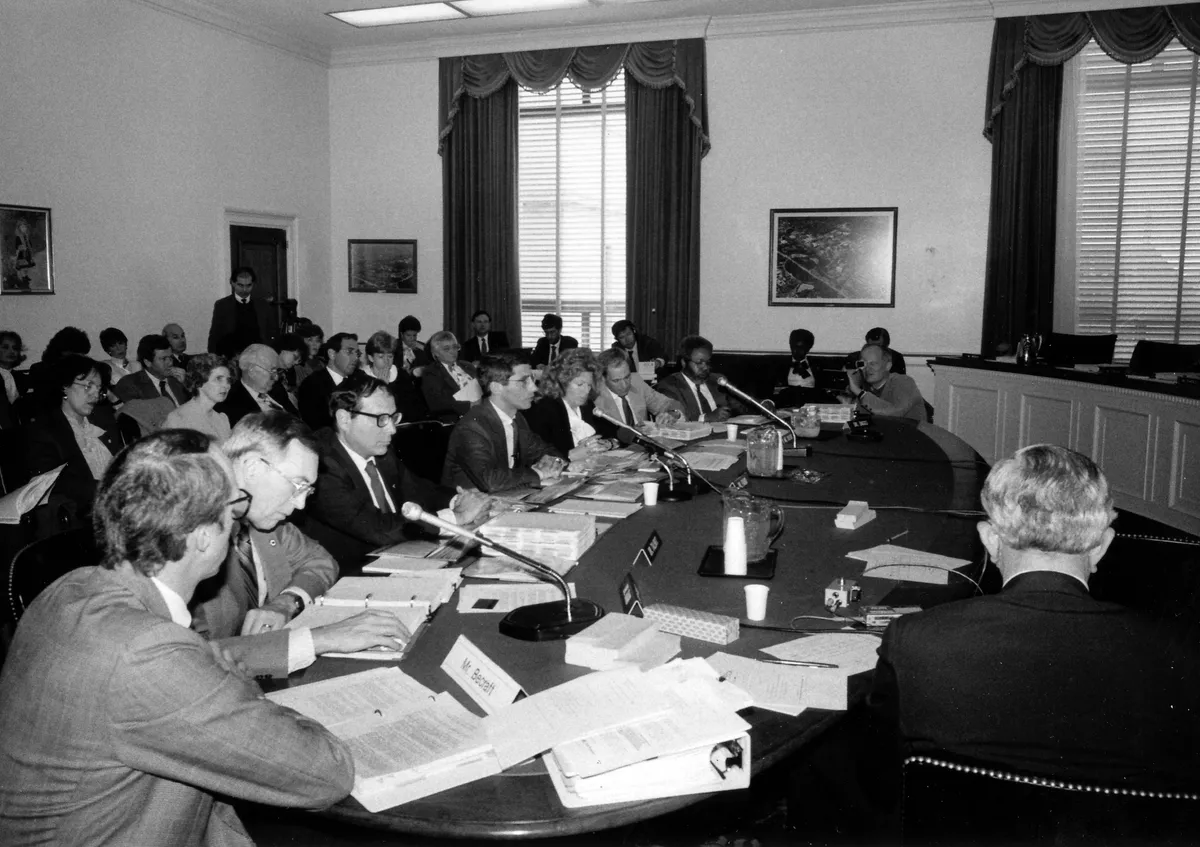
Fauci appeared before the Senate Homeland Security and Governmental Affairs Committee on July 29, 2026, under subpoena from Chairman Rand Paul. After delivering a brief opening statement in which he characterized the hearing as a vehicle for political prosecution rather than legitimate oversight, Fauci invoked the Fifth Amendment more than 100 times over approximately three hours (some accounts put the count at 111).[1][6]
His legal team had advised a blanket invocation strategy specifically to avoid the selective-waiver problem: answering some questions but not others on the same general subject can be construed as opening the entire subject matter to compelled testimony. The committee chair removed Fauci’s attorney, David Schertler, from the hearing room after Schertler attempted to speak. Paul stated: “This testimony is from Anthony Fauci. This is not a game with his lawyers.”[6]
Fauci declined questions ranging from gain-of-function research and pandemic origins to the day of the week and the color of his tie, the latter two appearing designed to demonstrate the breadth of the refusals. Libby Adler, a Northeastern law professor, noted that the Fifth covers any question whose truthful answer could contribute to a chain of prosecution, including seemingly innocuous ones that establish a timeline or presence.[8]
The opening statement created a separate legal question: whether making affirmative statements in an opening statement constitutes a waiver of the Fifth for related subject matter. Jonathan Turley and former prosecutor Fahey both identified this as a potential vulnerability, citing the Lois Lerner precedent from the 2013 IRS hearings, where Lerner’s brief statement before invoking the Fifth generated a sustained congressional dispute over waiver.[5]
The contempt referral and its procedural bypass
One week after the hearing, the committee voted 8 to 5 along party lines to hold Fauci in contempt of Congress. Rather than route the resolution through a full Senate floor vote (the standard procedure, which would require 60 votes to overcome a filibuster); Paul referred the matter directly to the Justice Department.[10][11]
Legal experts have questioned whether this shortcut carries legal weight. University of North Carolina law professor Michael Gerhardt noted that “one of the smartest things to do” in Fauci’s situation is minimal disclosure, a view that implicitly accepts the ongoing risk of prosecution exposure.[11] Sen. Gary Peters (D-Mich.), the ranking member, accused Paul of deliberately circumventing standard practice, warning that “future witnesses will argue that appearing before Congress exposes them to punishment regardless of whether they comply.”[6] Jeremy Paul, a Northeastern constitutional law expert, noted that a full Senate vote is normally a prerequisite before DOJ referral.[8]
The Justice Department confirmed receipt of the referral and stated it was “reviewing it and will work with the Senate accordingly.” U.S. Attorney for the District of Columbia Jeanine Pirro is the named official to whom the resolution is directed. No prosecution has been initiated.[10]
If the DOJ proceeds, a court would ultimately rule on whether Fauci’s Fifth Amendment invocation was legally valid, which is precisely the question the viral commentary treats as already settled. Conviction for contempt of Congress carries a fine of up to $100,000 and up to one year in prison. Fauci’s attorneys called the contempt vote “a crude political stunt intended to punish Dr. Fauci for exercising his constitutional rights.”[10]
Bottom line
The viral claim gets the underlying legal logic directionally right for one category of questions: for matters clearly within the pardon’s scope, where no new federal crime and no state law exposure is present, Brown v. Walker‘s reasoning does undercut Fauci’s privilege. The social media framing is not pure fabrication.
What the claim gets wrong is the certainty. The three genuine complications: perjury exposure from the hearing, active state investigations by three AGs, and unresolved pardon validity questions. Each provides legally cognizable grounds for invoking the Fifth in a context where the prudent legal advice is a blanket refusal. None has been resolved by a court. The claim’s phrase “no legal right” requires a judicial determination that has not yet been made. Rating: Contested.
Sources
- Why did Anthony Fauci invoke the Fifth Amendment? Senate hearing explained
- Do presidential pardons remove the Fifth Amendment rights of recipients?
- Biden pardoned Fauci in January 2025, shielding him from federal prosecution
- Brown v. Walker, 161 U.S. 591 (1896)
- Can Fauci hide behind the Fifth? Experts weigh in on Biden pardon’s scope
- Why was Fauci held in contempt for pleading the 5th, and what happens next?
- Three state attorneys general subpoena Anthony Fauci over Covid guidance
- Fauci contempt action: His pending legal predicament, explained
- Fauci’s Fifth Amendment answers may test Biden pardon as GOP eyes contempt
- Senate committee votes to hold Fauci in contempt, seeking to bypass floor vote with DOJ referral
- Senate Committee Passes Fauci Contempt Resolution — Fauci’s Lawyer Calls It ‘Meritless’